Why This Problem Mattered
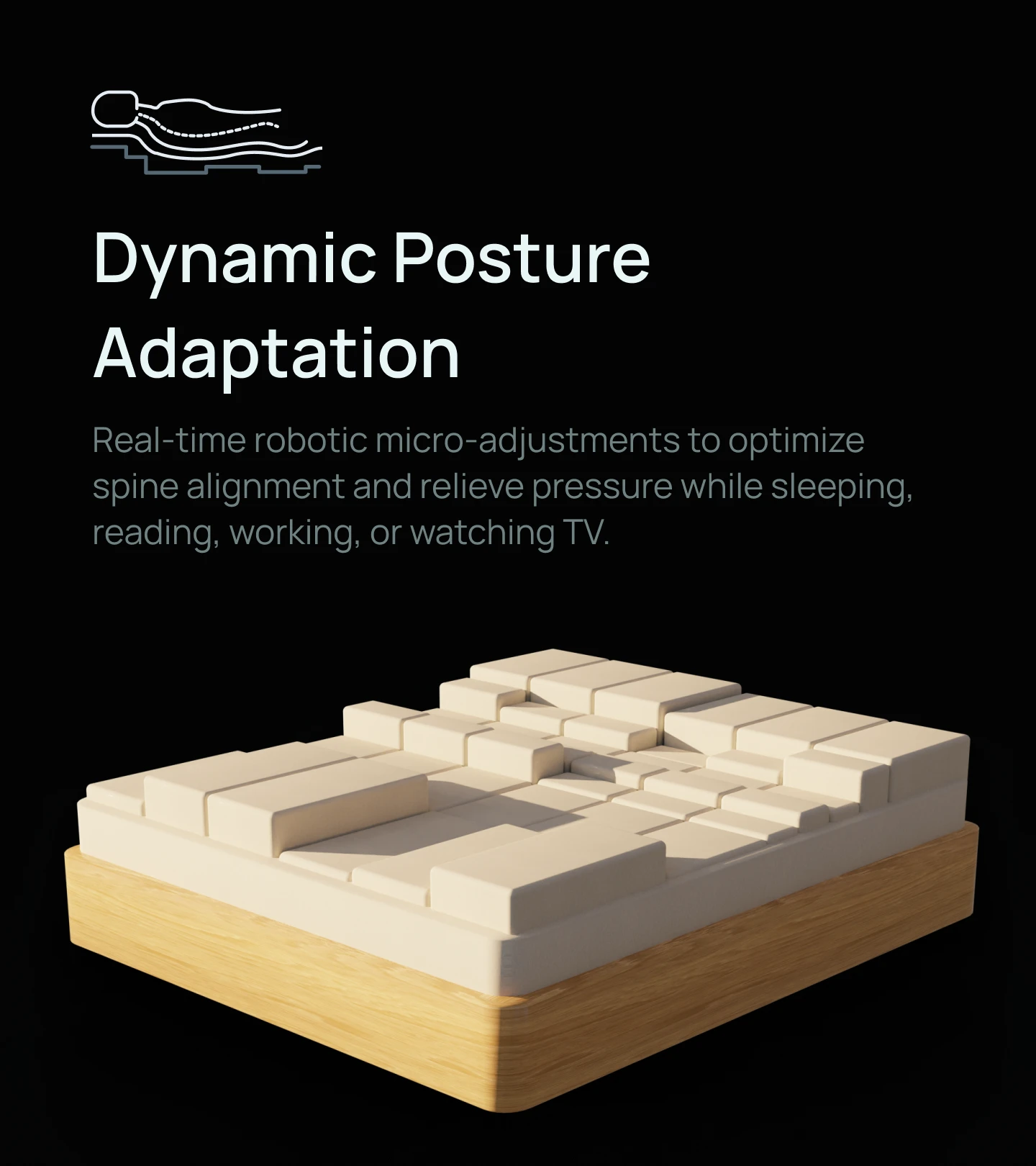
Unlike most digital products, CAMA isn’t just something users look at — it’s something they lie on.
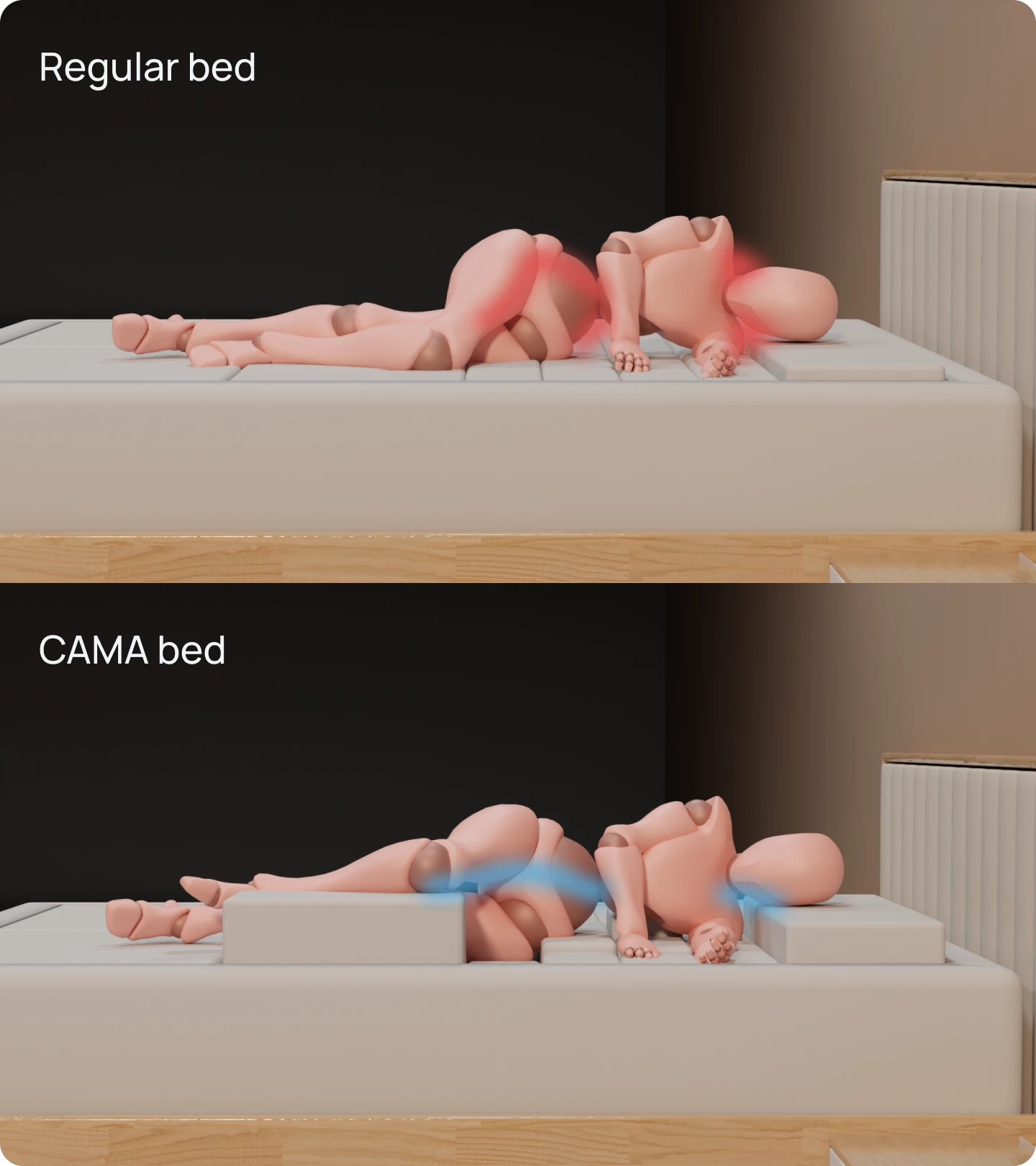
The bed moves. It adjusts posture. It changes elevation. It does so while users are asleep, vulnerable, and unable to supervise what’s happening. In this context, trust isn’t a nice-to-have; it’s foundational. A single moment of confusion or perceived loss of control could permanently break confidence in the product.
The challenge wasn’t simply to provide controls. It was to design an experience where users felt safe, informed, and in charge, even when the system was acting autonomously on their behalf.
What Made It Hard
There were several tensions inherent to the problem:
Autonomy vs Control
The bed needs freedom to adjust intelligently, but users must never feel overridden.
Safety vs Calm
Emergency controls must be instantly accessible without making the product feel dangerous.
Real-time vs Disruption
Explaining what the bed is doing during sleep risks waking the user or creating anxiety.
Single vs Shared Use
In many cases, the bed is shared, introducing permissions, conflicts, and responsibility boundaries.
Designing trust here required restraint as much as capability.
Key Design Decisions
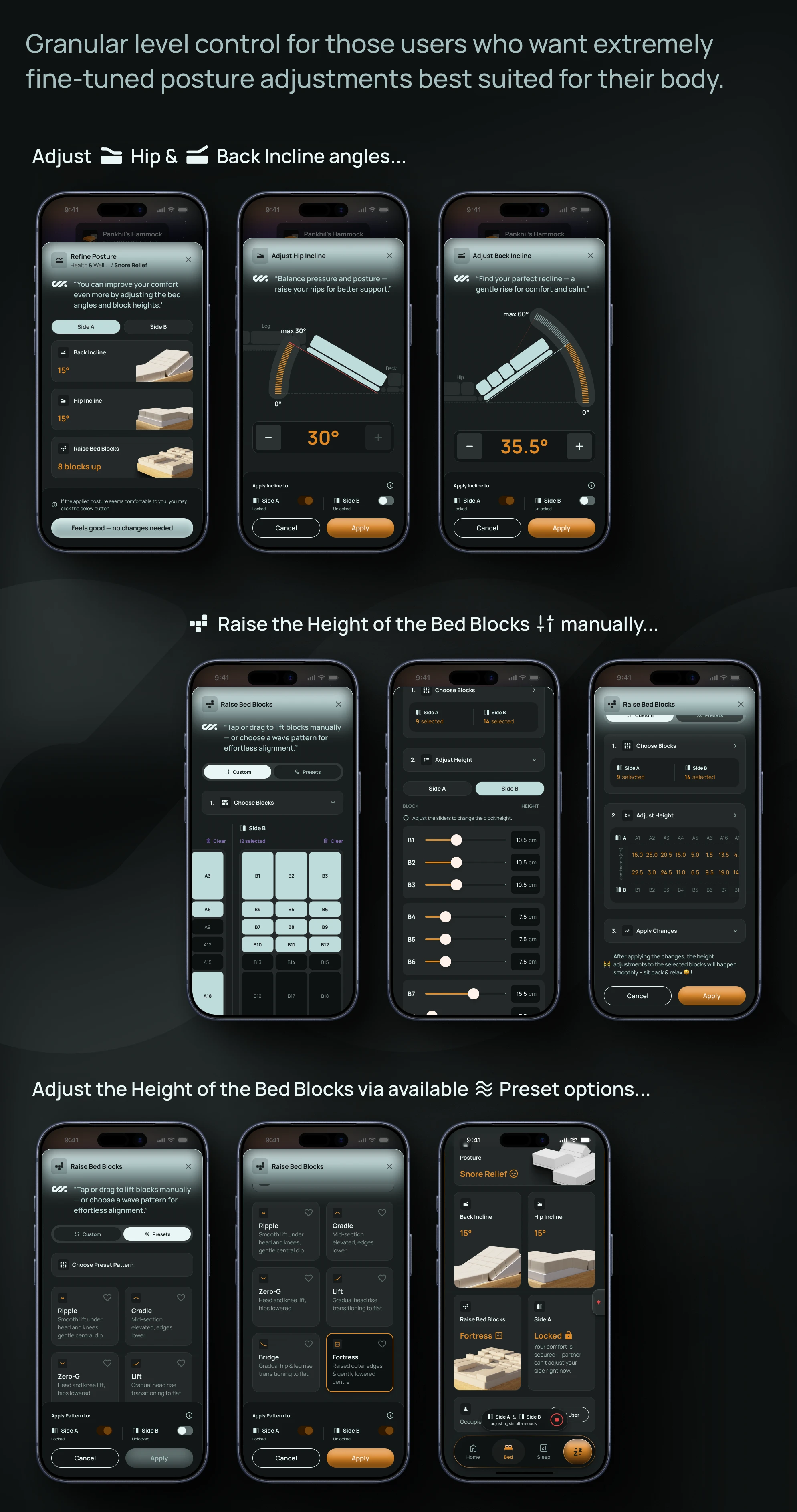
Control Through Intent, Not Micromanagement
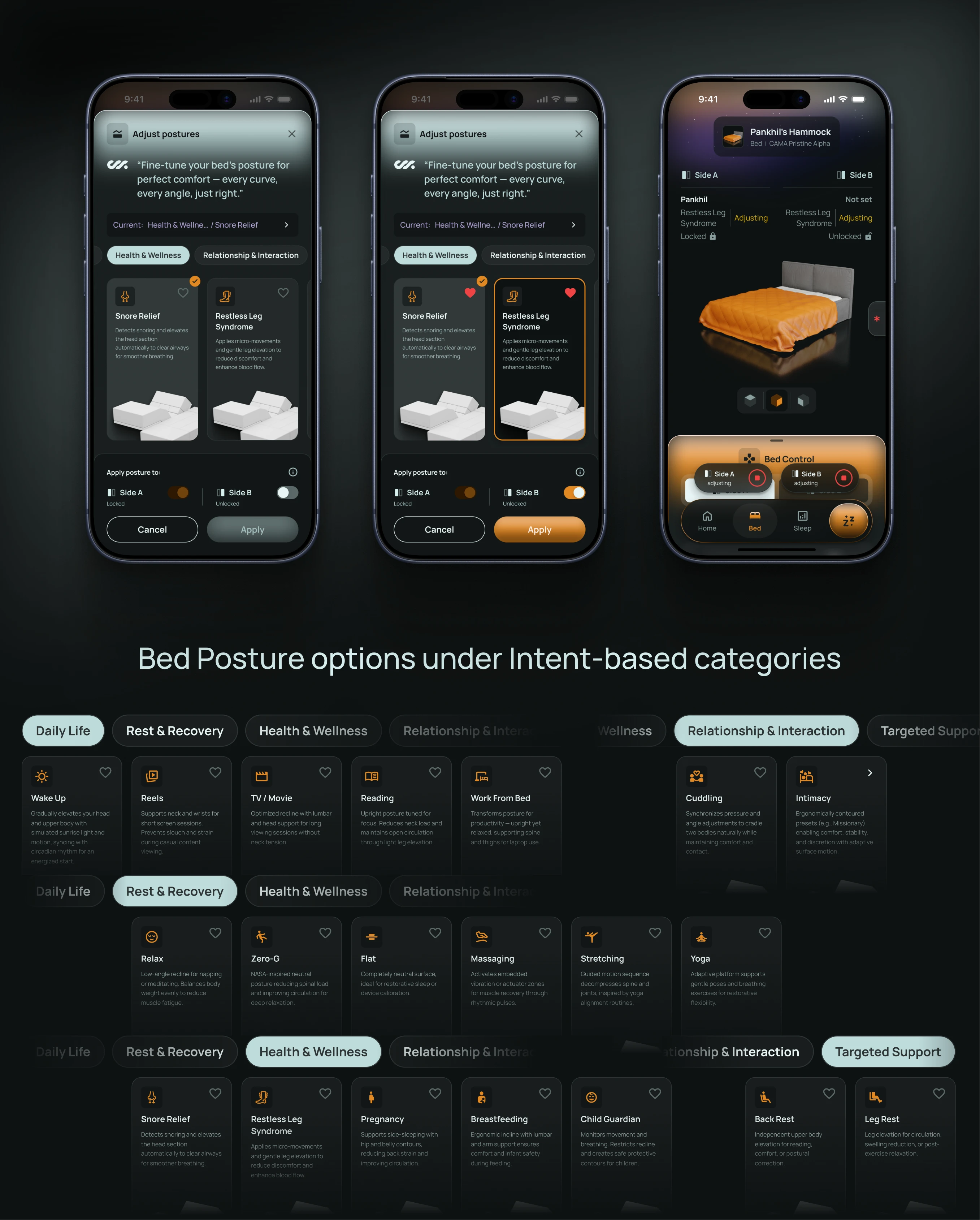
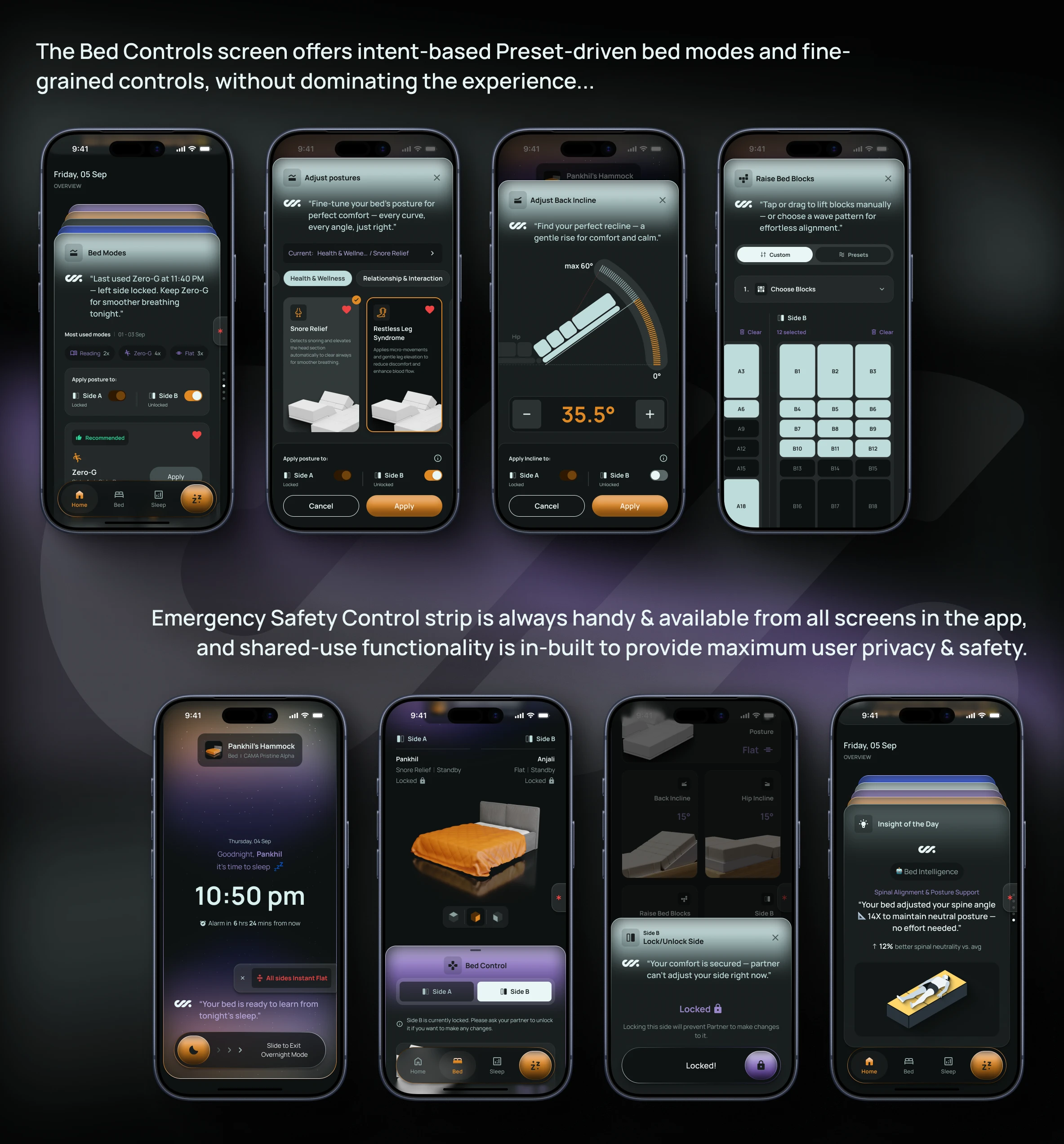
I designed the control system around intent-based actions, not mechanical manipulation.
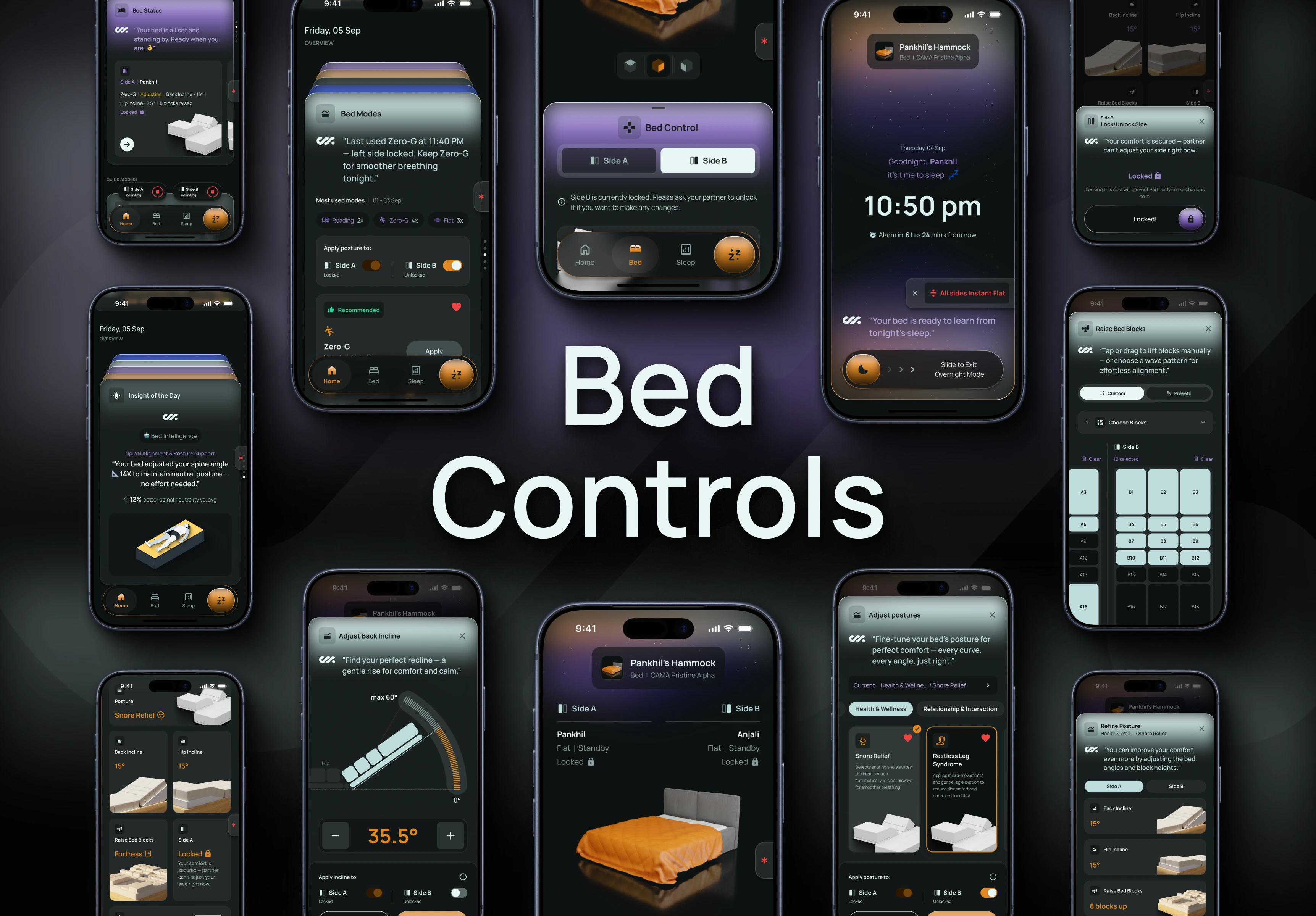
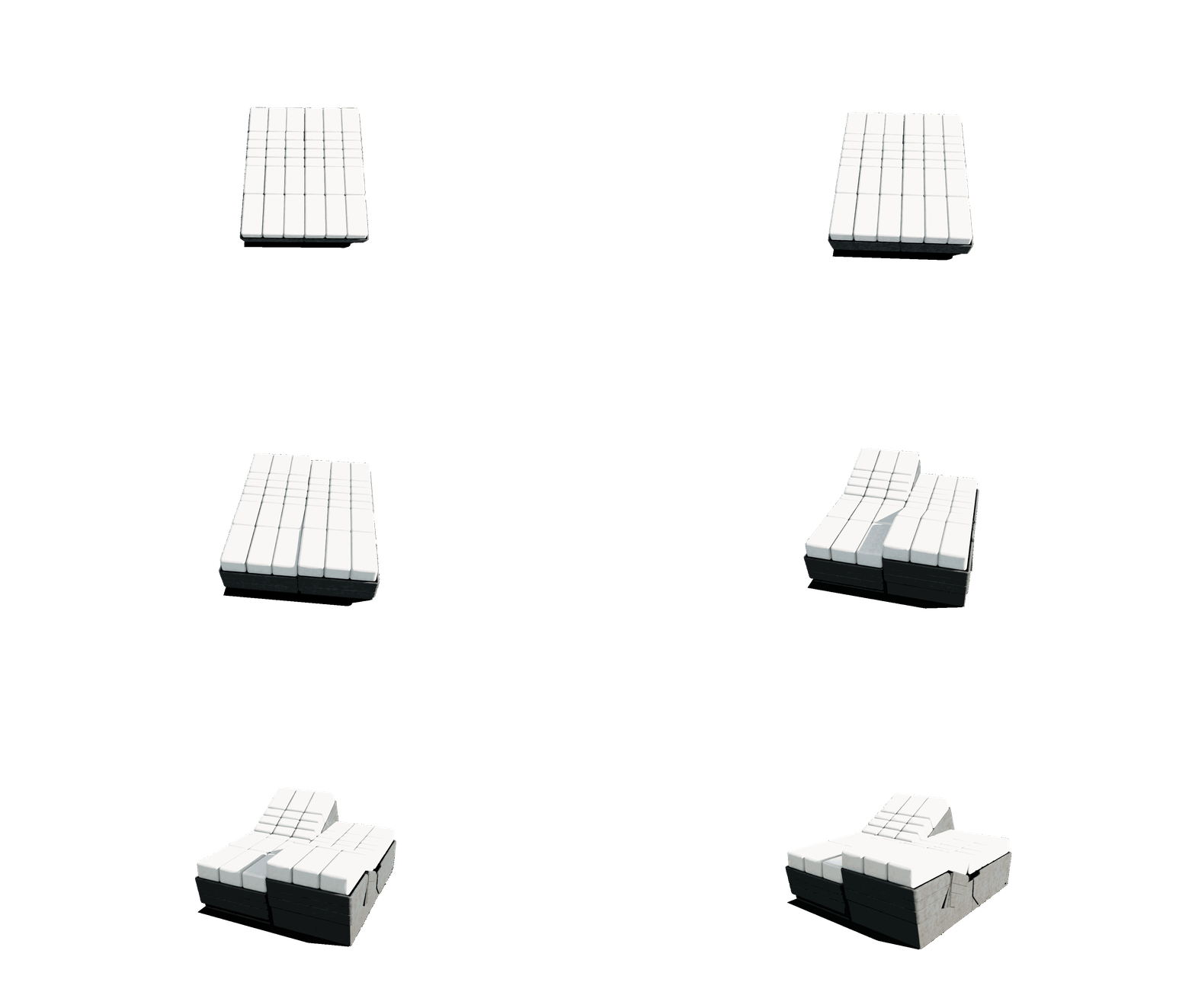
Users interact primarily through bed modes and presets—each representing a clear, human goal. These modes abstract away the complexity of block elevation and posture math, letting users feel confident in what they’re asking the bed to do.
For users who want finer control, advanced adjustments are available, but never forced. This ensures power users are supported without overwhelming everyone else.
Autonomy That Explains Itself Afterward
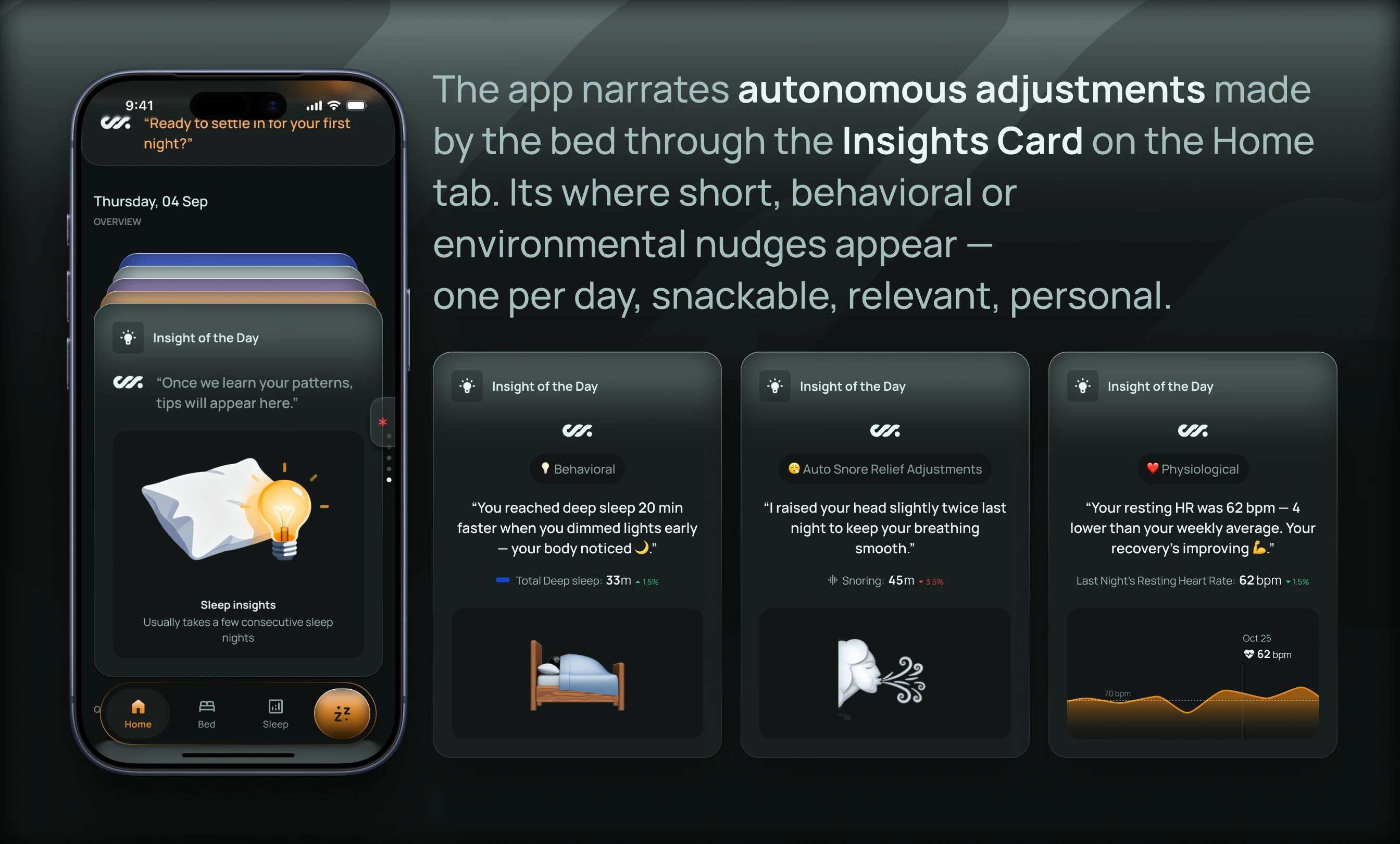
A critical decision was to avoid narrating autonomy in real time.
The bed may adjust posture, redistribute pressure, or activate snore relief while the user sleeps—but these actions are never surfaced in the moment. Instead, they’re reflected later through calm, outcome-focused insights: improved alignment, reduced restlessness, steadier breathing.
By explaining impact rather than mechanics, the system earns trust without demanding attention or permission.
Safety That’s Always Available, Never Alarming
Emergency controls were treated as a first-class system, not a secondary setting.
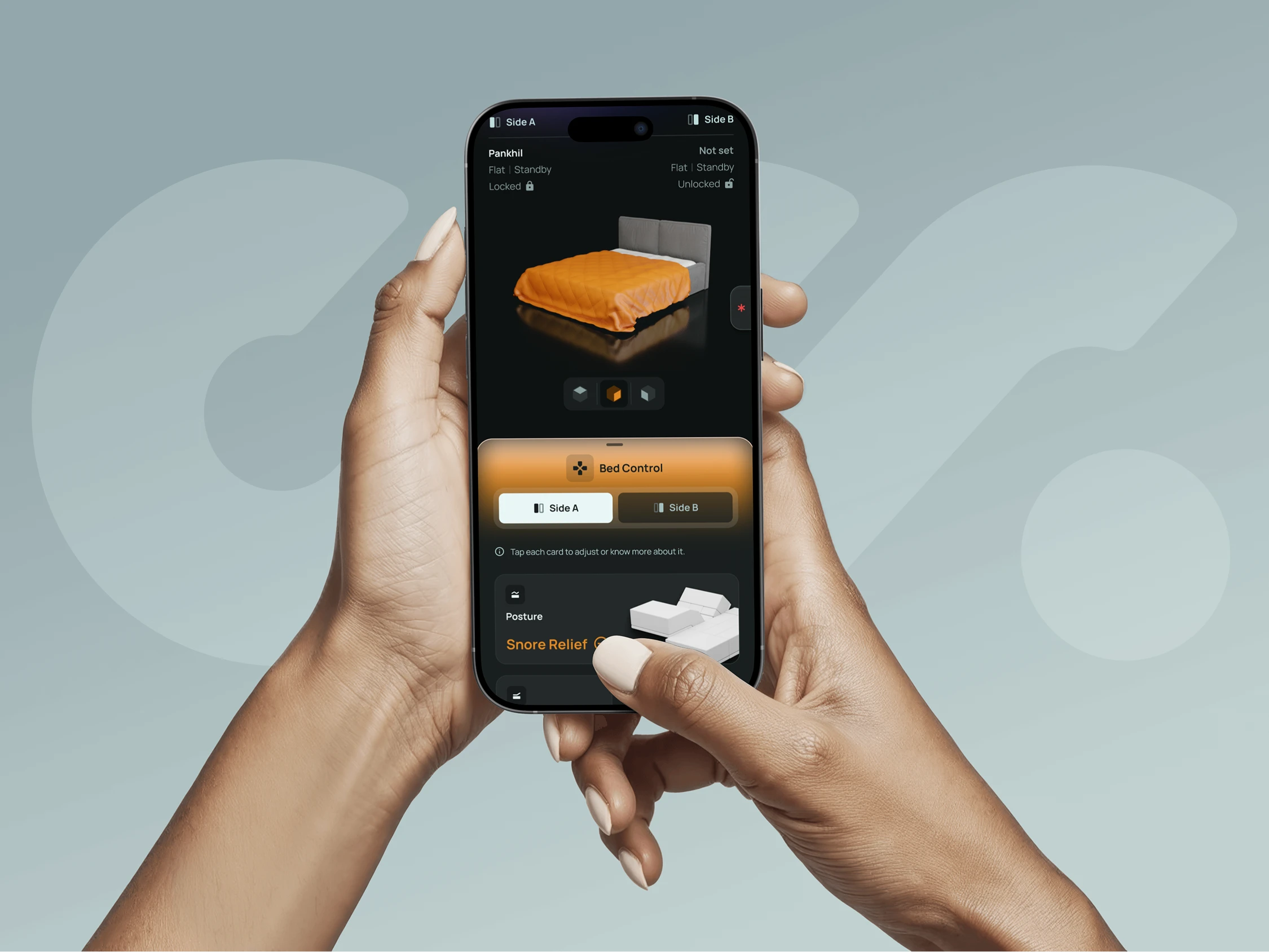
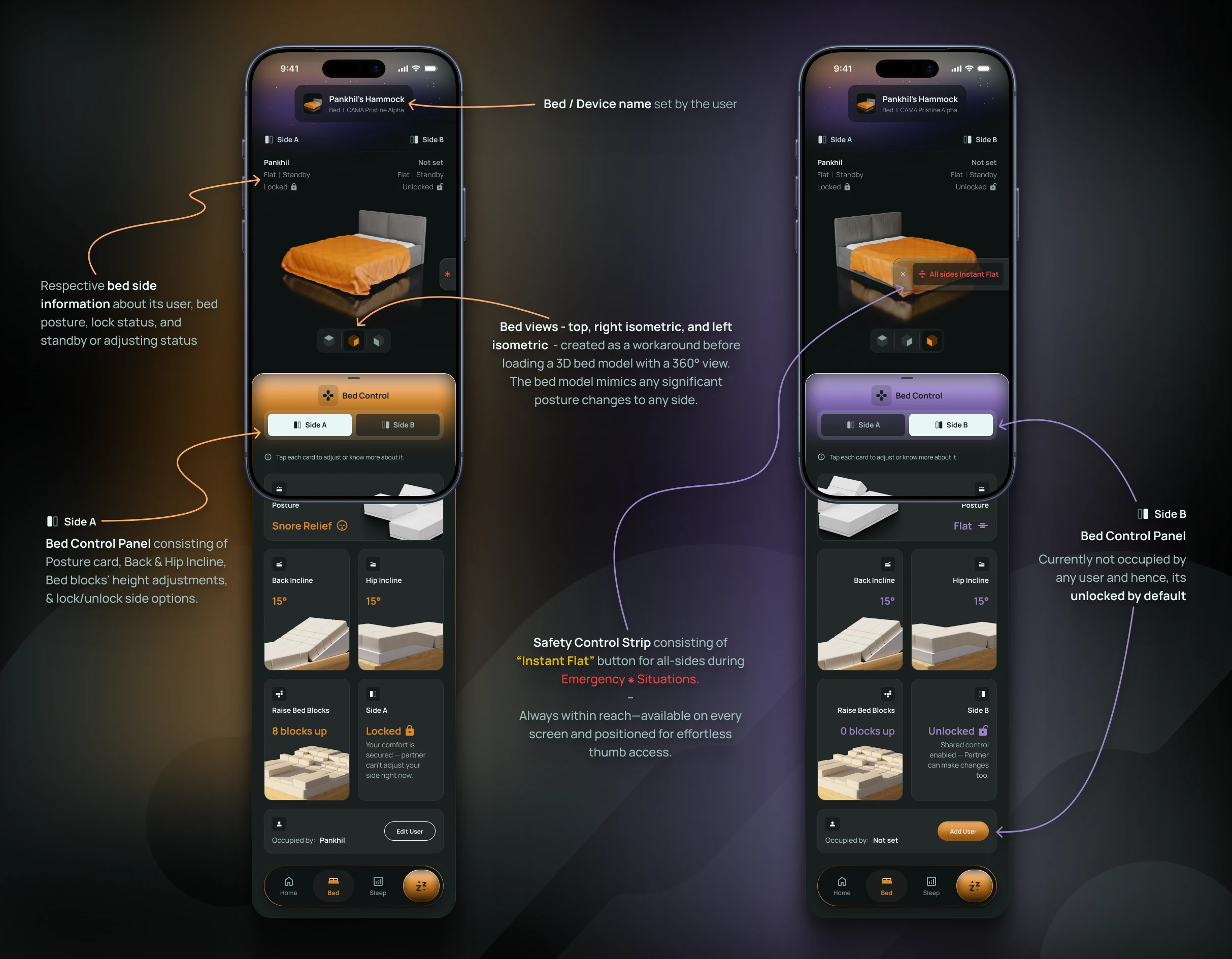
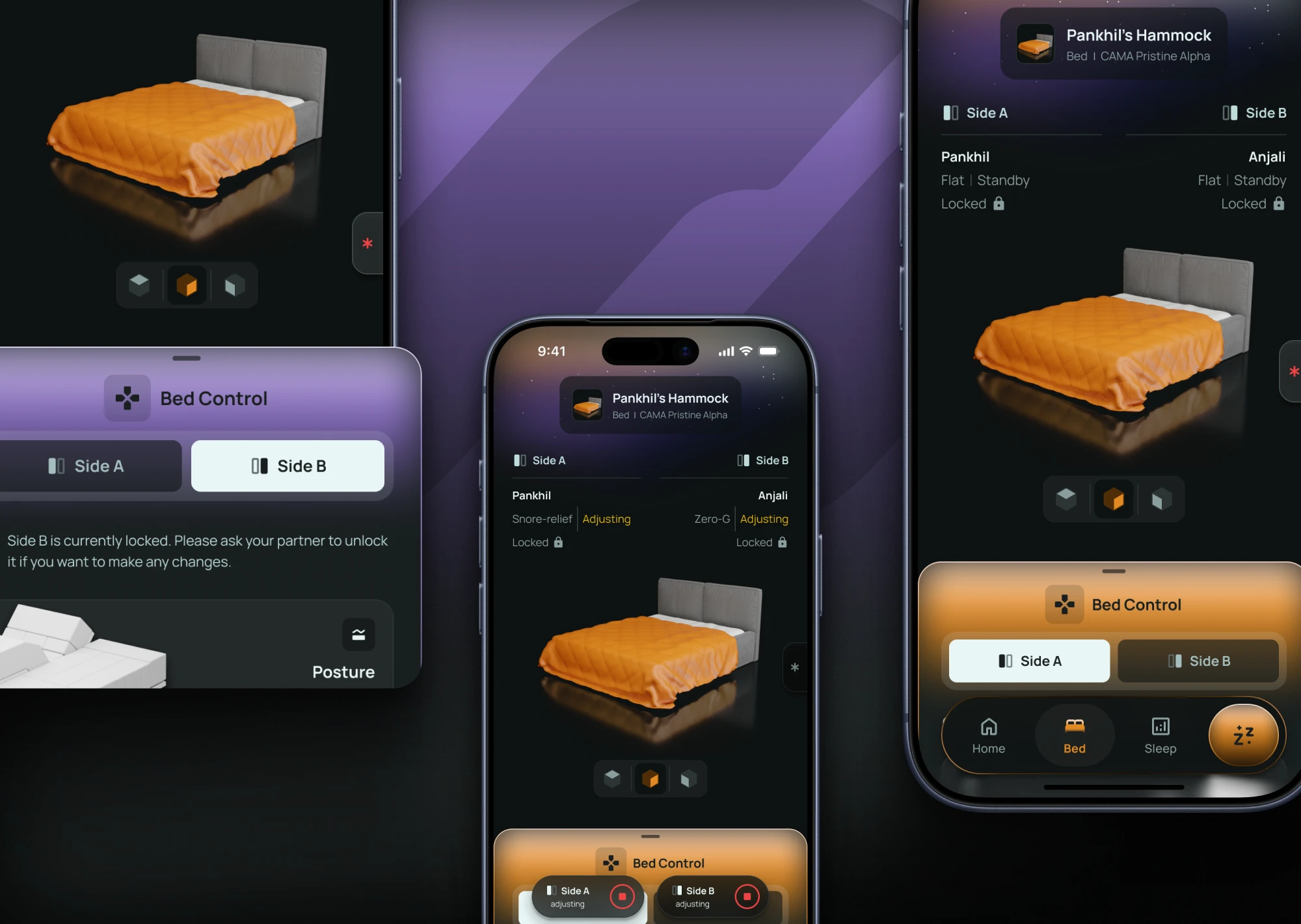
A persistent emergency strip—featuring an instant flat action—is accessible from every screen: Home, Bed Controls, and Sleep Stats. Its placement at mid-viewport height ensures one-handed reachability, while its visual treatment remains subtle enough not to induce anxiety.
This design communicates an important message: you’re always in control, even when you don’t need to be.
Real-Time State Without Cognitive Noise
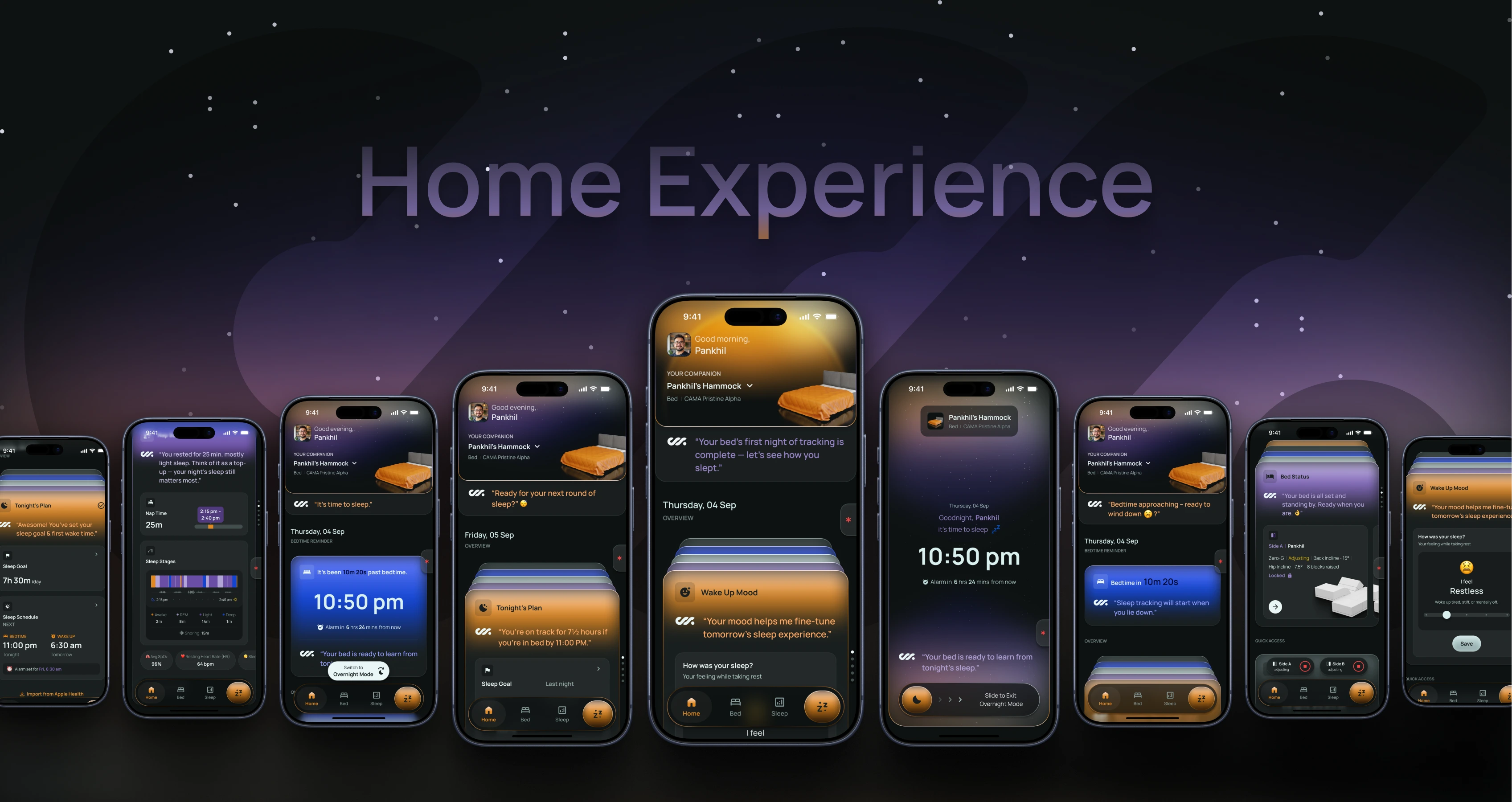
Users still need reassurance. To provide it without disruption, I introduced lightweight real-time states—such as Idle or Adjusting—paired with subtle motion cues and haptics.
These signals confirm that the bed is responding, without pulling users into the underlying mechanics or timelines. The system feels alive, but never demanding.
Designing for Shared Reality
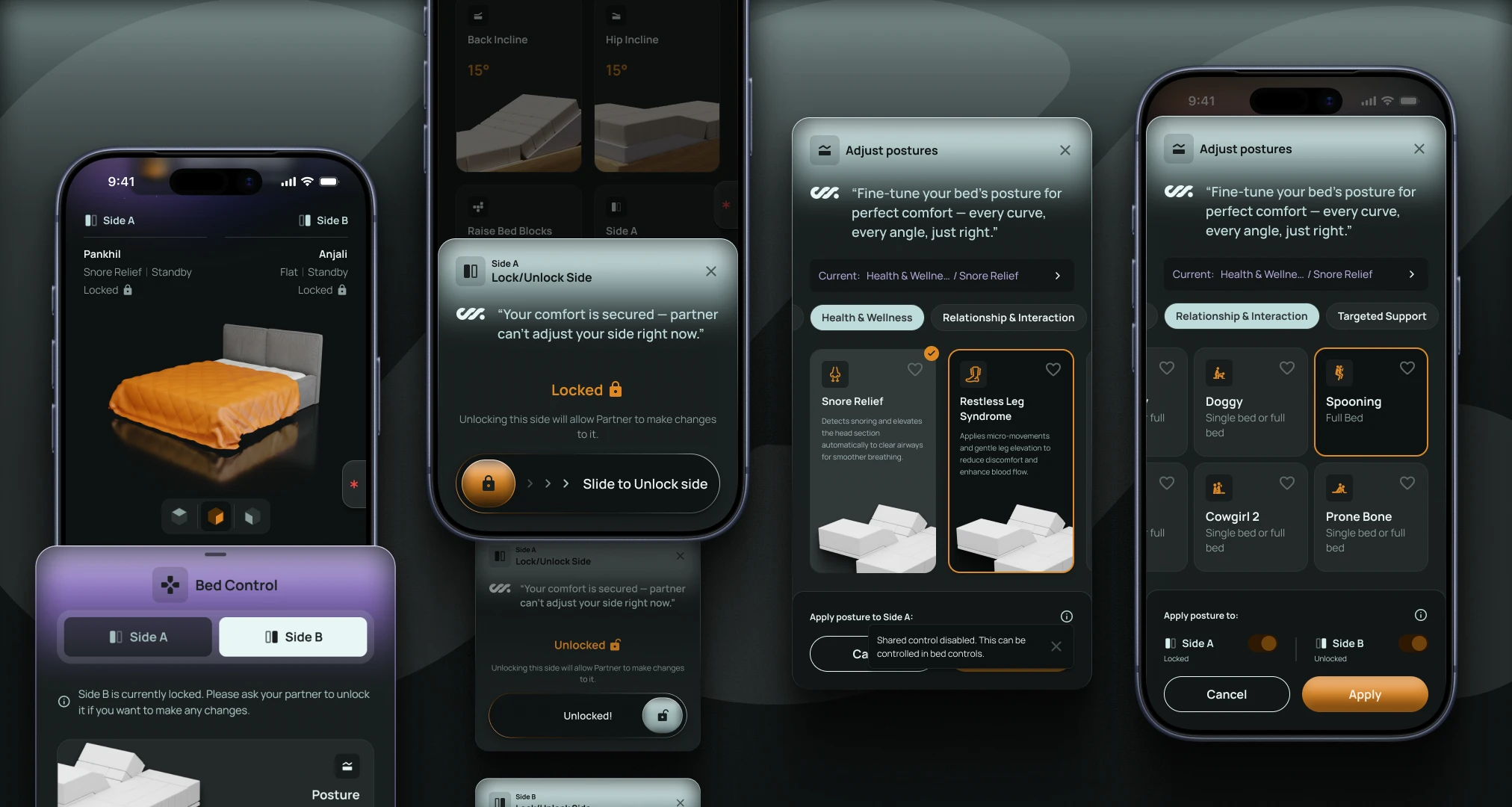
In real homes, beds are often shared.
I designed side-specific controls, locking mechanisms, and clear status indicators so that one user’s actions don’t unexpectedly affect the other.
Isolated Control
When control is isolated (e.g., adjusting just the left side's posture), it’s visually reinforced to prevent accidental disruption to the partner.
Whole Bed Autonomy
When autonomy or a specific mode applies to the entire bed (e.g., Intimacy mode), the UI makes that explicit and boundary-spanning.
This reduced ambiguity and helped prevent conflict—both mechanical and interpersonal.
How This Shows Up in the Product
- Preset-driven bed modes abstract complex movement into human intent
- Fine-grained controls exist, but never dominate the experience
- Autonomous behavior is surfaced through post-sleep insights, not interruptions
- Emergency actions are always one gesture away
- Shared-use logic is designed into the system, not added later
Why This Matters Beyond This Product
Designing trust in autonomous systems is a transferable skill.
The same principles apply to medical devices, mobility systems, AI-driven tools, and any product where users must rely on intelligence they can’t fully see or supervise. Trust isn’t built through transparency alone—it’s built through predictability, restraint, and clarity of intent.
This project reinforced a core belief in my design approach: the most trustworthy systems are often the quietest ones.